Computer Cores
Cores Available for all MEGA65
Cores are shown in no particular order. Please look at the right sidebar to get to for the specific Cores.
Commodore 64 (C64)
https://en.wikipedia.org/wiki/Commodore_64
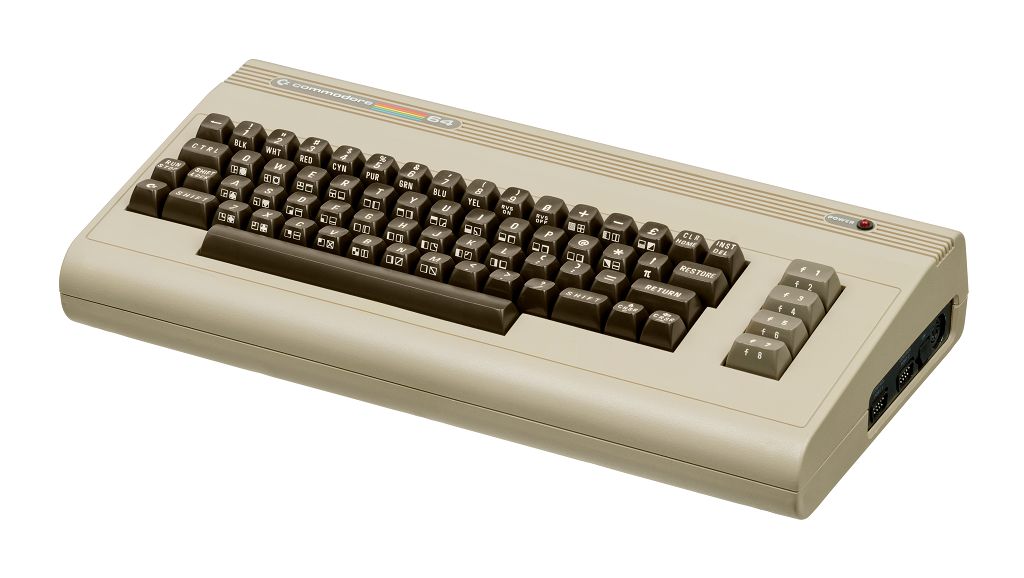
The Commodore 64 is a personal computer released in 1982. It is the precursor of the (unreleased) C65 which is the machine the MEGA65 is recreating. It is usually abbreviated as just C64.
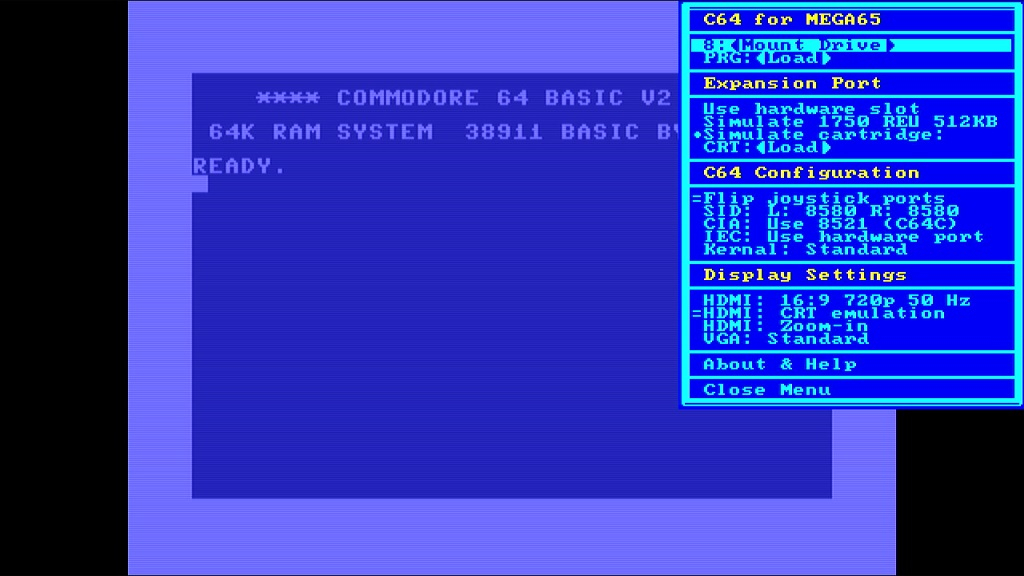
The core for the C64 is nearly 100% compatible to a real C64. Hardware like cartridges and floppy drives can be plugged into the MEGA65 and will work. The core can load disk images (.d64 files) and cartridge images (.crt files) from any of the two SD Cards in the MEGA65. Tape images are not supported. The Core only supports a PAL C64 system. Programs that only work correctly on NTSC (USA/Japan) systems are not compatible. Please see all details in the documentation.
The Core is available in versions for R3 and R6 boards.
Full instructions for this core can be found at https://c64.mega65.org
Download the Core on the MEGA65 Filehost: https://files.mega65.org/?id=896a012f-59e4-456c-b91f-7e989b958241
The Core discussion on Discord: https://discord.com/channels/719326990221574164/794775503818588200
The Core issue tracker on Github: https://github.com/MJoergen/C64MEGA65/issues
A new version with MANY new features is currently available for testing. Check out https://c64.mega65.org/alphasix.html for details.
Amiga 500
https://en.wikipedia.org/wiki/Amiga_500
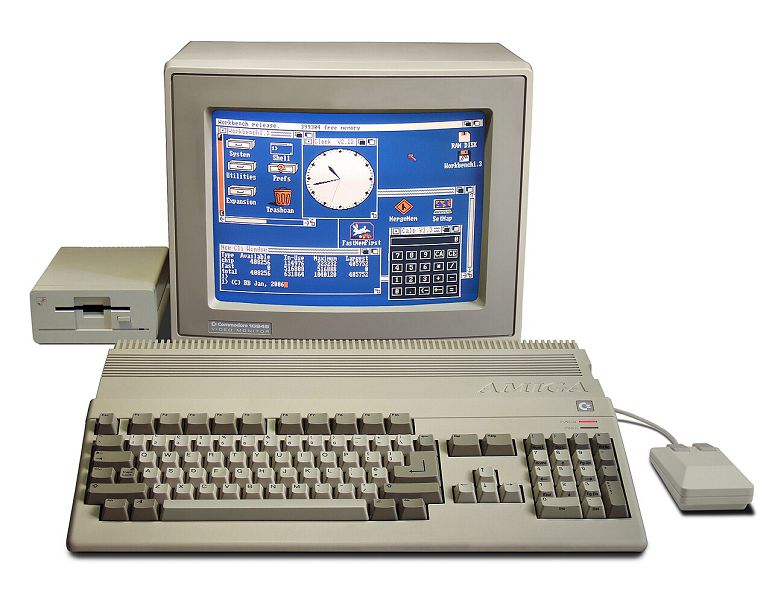
Released in 1987, the Amiga 500 (“A500”) was the first computer for the home market capable of multitasking. Although popular with hobbyists, arguably its most widespread use was as a gaming machine, where its graphics and sound were of significant benefit.
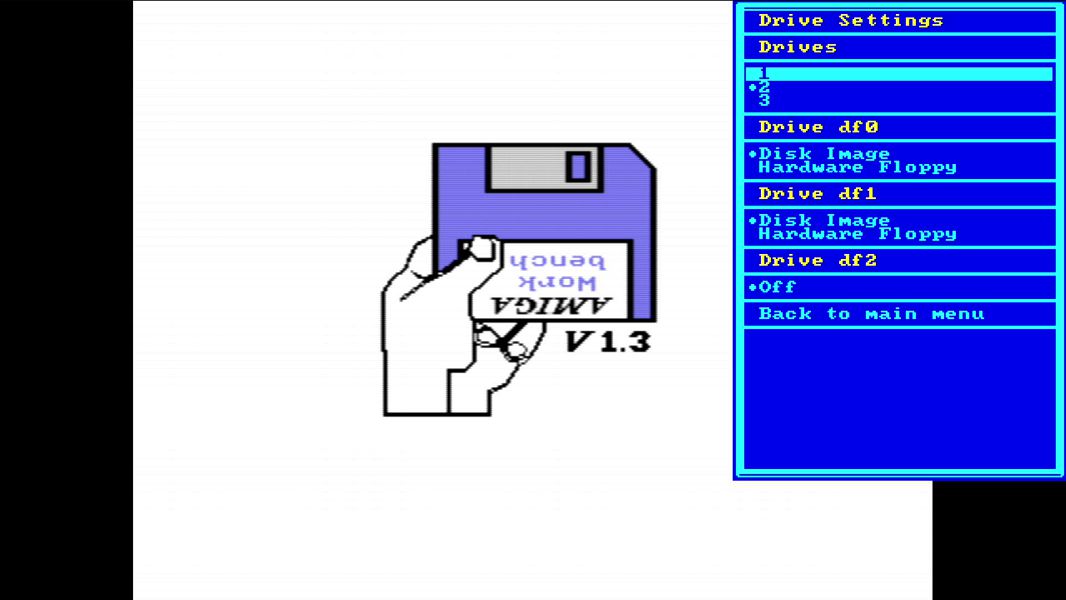
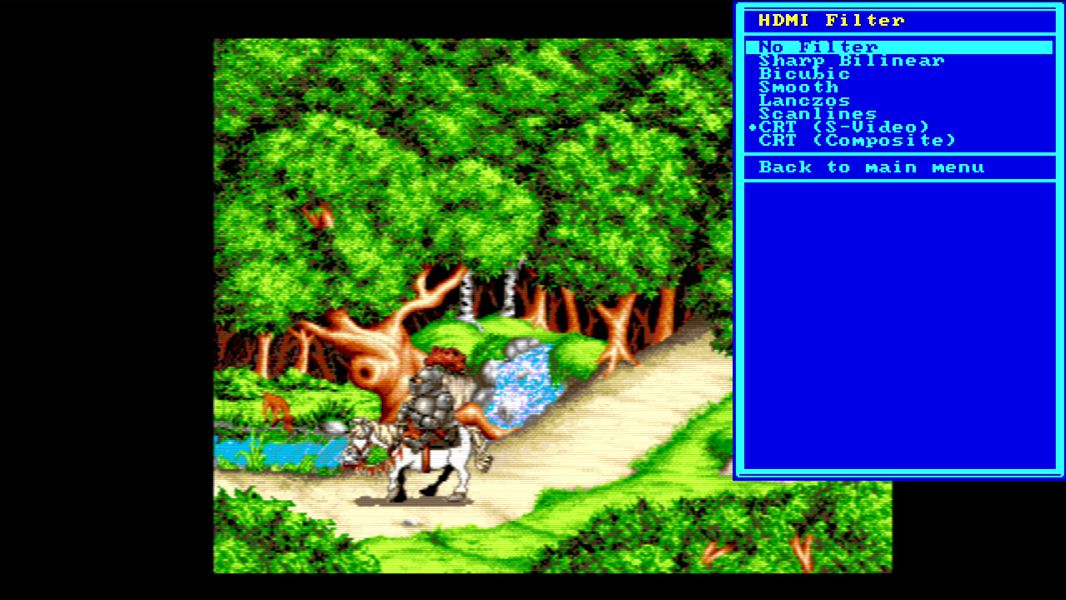
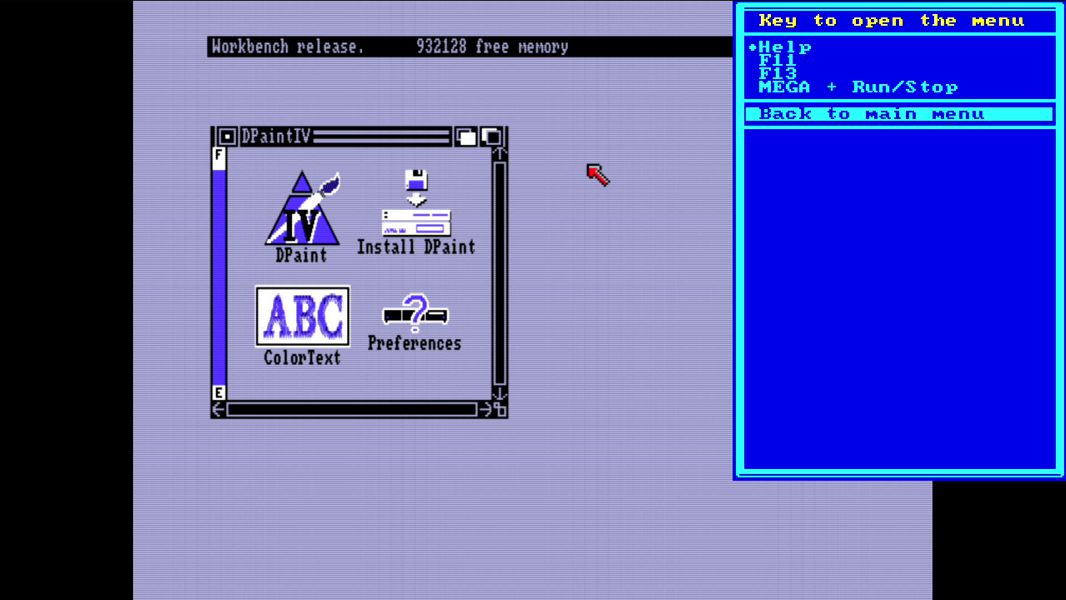
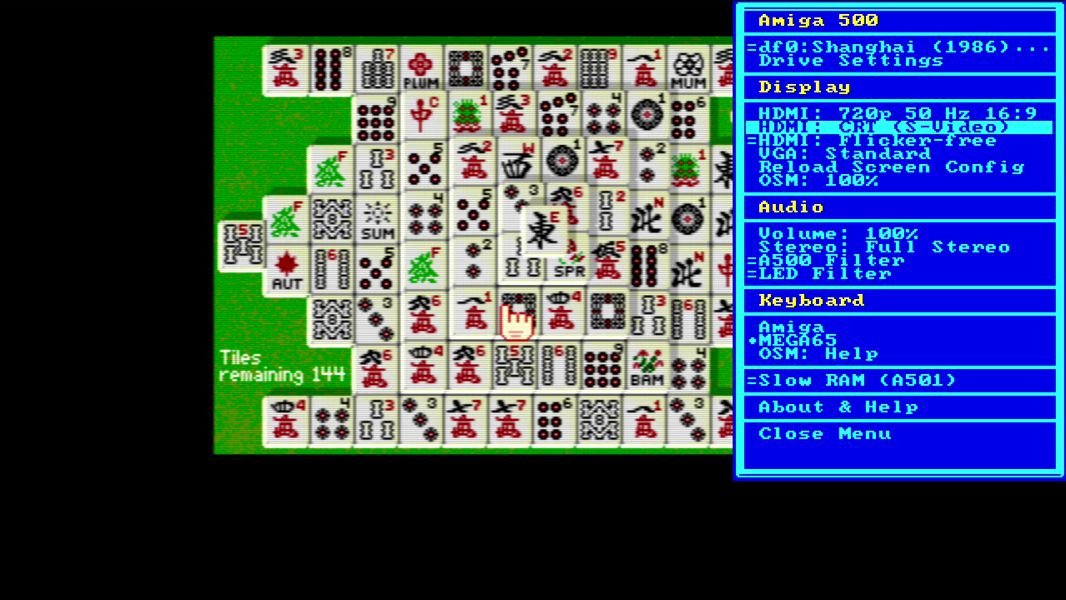
A first version of an Amiga 500 Core has been released. This core allows running nearly all known disk based demos and games, but does not support the internal diskdrive. You need to load ADF images from the SD Card. Games with several disks can be played, but there is a delay when you mount a new disk. A Beta Version of the core that supports three drives and experimental reading and writing from the 3.5 inch disk drive is available in the Discord:
https://discord.com/channels/719326990221574164/801767398675316756/1545498902118006895
Read the documentation for the core here, especially regarding Mouse Support and Keyboard Mapping: https://a500.mega65.org
The Core can be found on the MEGA65 Filehost here: https://files.mega65.org?id=bdbf637c-83b5-45c4-802f-0fd459f6b49e
The Core Issue Tracker is on Github: https://github.com/sy2002/AExp/issues
And the Core discussion can be found on Discord: https://discord.com/channels/719326990221574164/1313409877393276948
Apple II
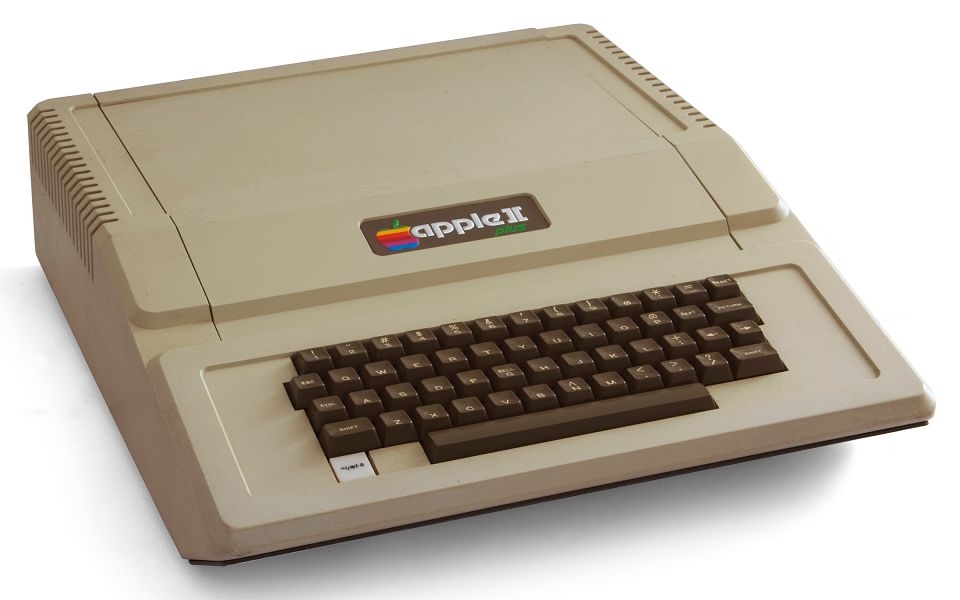
https://en.wikipedia.org/wiki/Apple_II_(original)
The Apple II is a personal computer released in 1977. An Beta version of a Core has been released. Please make sure remove all Amiga-style mice from the MEGA65 before starting this Core, as these will trigger a diagnostic mode in the Apple II.
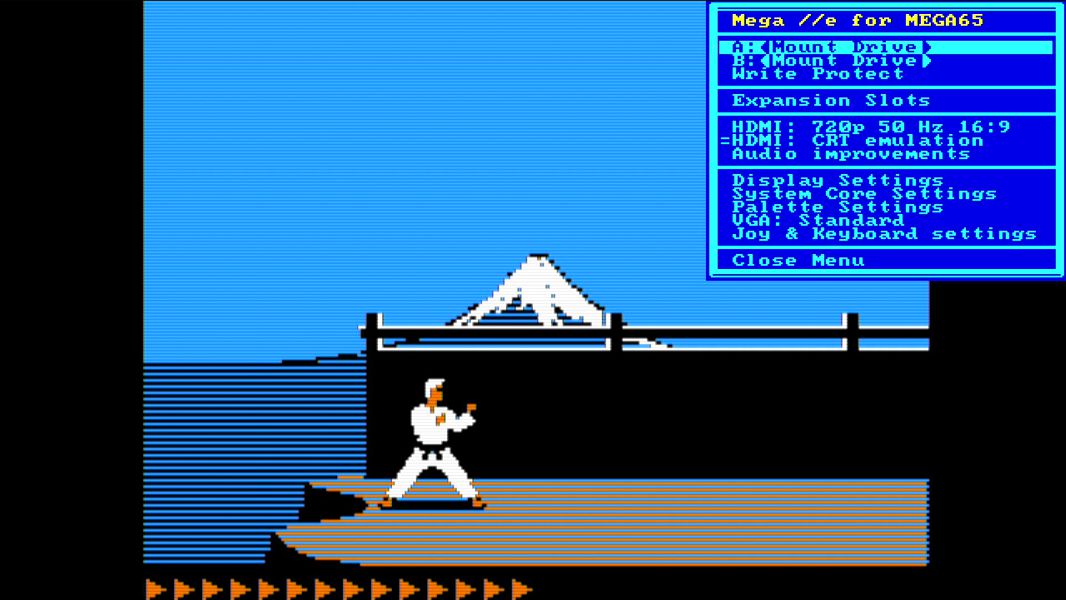
You can find the Core on the Filehost: https://files.mega65.org?id=09c33961-901d-4cd0-8bea-616c37db5c50
Also you can discuss the Core and get updates on Discord: https://discord.com/channels/719326990221574164/1522848976607641700
Amstrad / Schneider CPC 6128
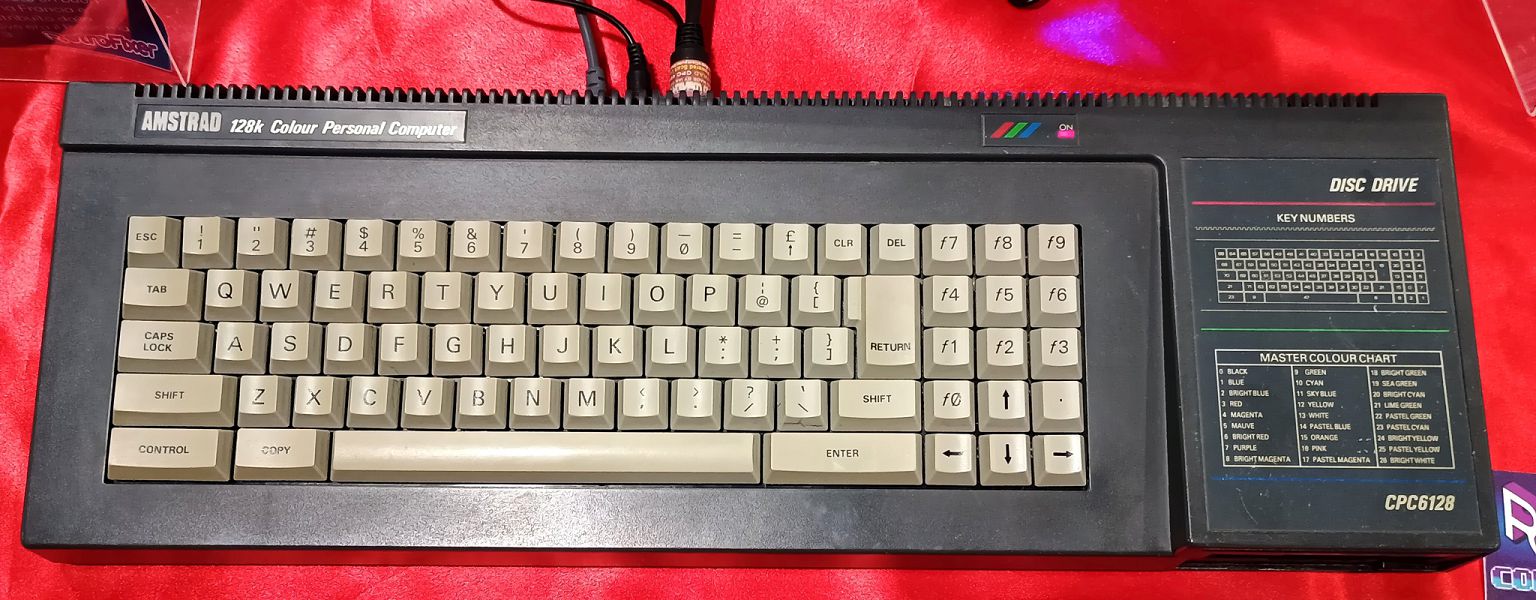
The Amstrad CPC (short for “Colour Personal Computer”) is a series of 8-bit home computers produced by Amstrad between 1984 and 1990. The CPC models’ hardware is based on the Zilog Z80A CPU, complemented with either 64 or 128 KB of RAM. Their computer-in-a-keyboard design prominently features an integrated storage device, either a compact cassette deck or 3-inch floppy disk drive.
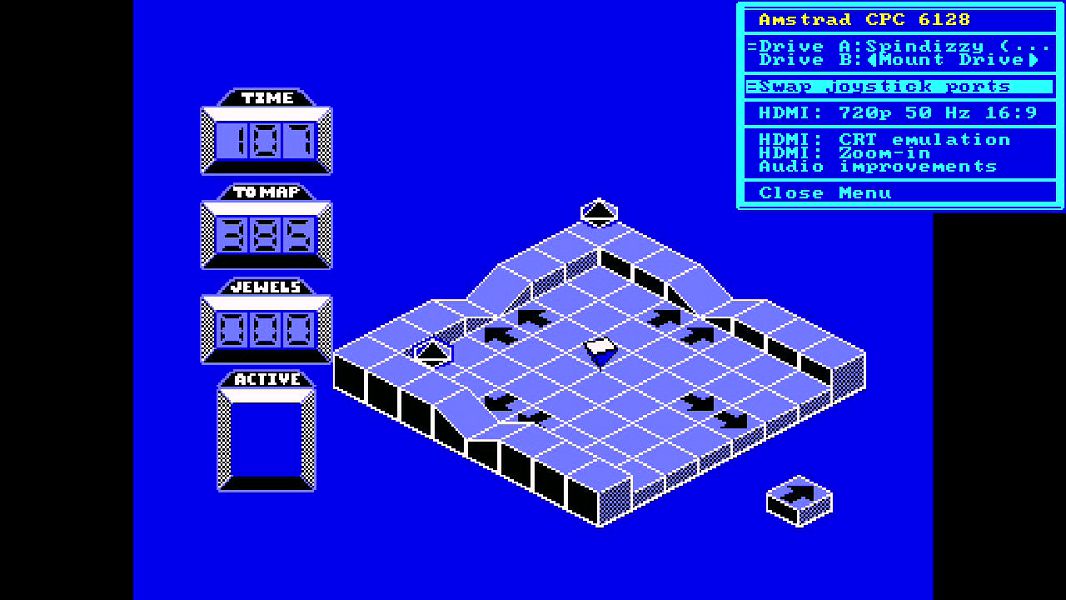
Download the Core on the MEGA65 Filehost: https://files.mega65.org?id=87b00453-6bd1-41f9-aec6-48299c73ee1f
Discuss the Core directly on Discord: https://discord.com/channels/719326990221574164/1547606919928353018
Commodore C16 & Plus4 (264)
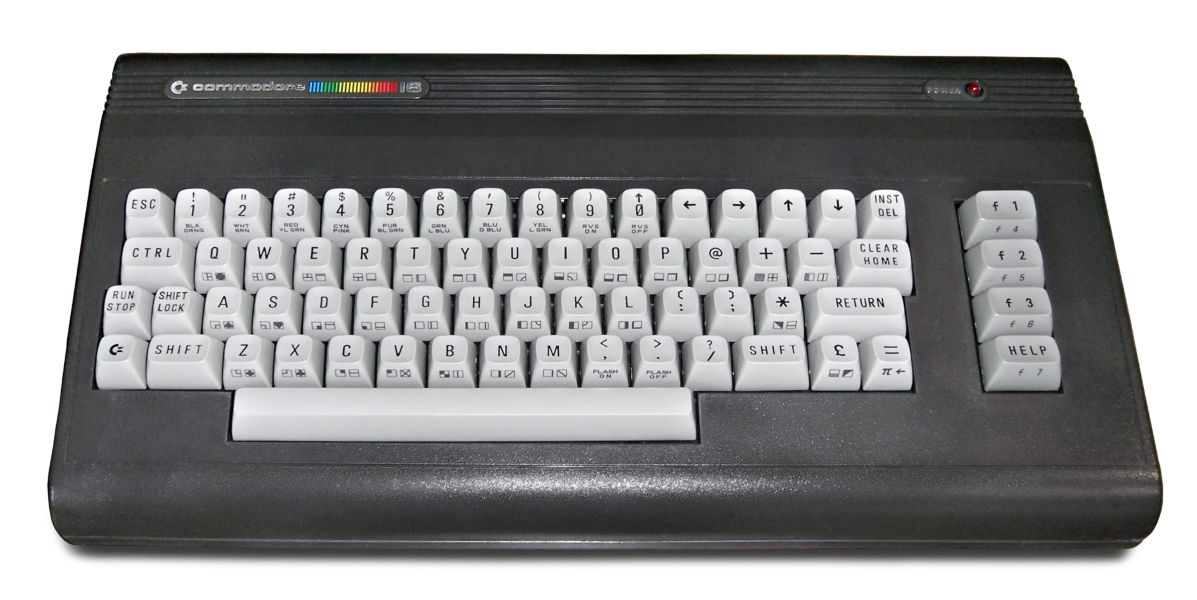
https://en.wikipedia.org/wiki/Commodore_16
The Commodore 16 familiy of computers, sometimes referred to the 264-series, consists of several models, mainly the C16 and the Plus/4. The major differences is the RAM size (16kb or 64kb) and the office software included with the Plus/4.
The C16 computers lack the Sprite and Scroll capabilities of the C64, but can display significantly more colours. There are quite a few demo programs and games that look better than on a C64, so it is worthwhile checking out.
The core for the C16 & Plus/4 emulates both ROM versions and both RAM sizes. Like with the C64 core, pressing HELP will bring up a menu with several options.
This core can load .prg and .d64 files but will not automatically run them. After selecting a .prg, please wait some seconds until the file has been loaded into RAM, leave the menu, and then type RUN.
Two versions of the Core are available and will most likely merge in the future.
Download the Core on the MEGA65 Filehost: https://files.mega65.org?id=04585f68-14c0-43ae-8dd5-6448445ac926
The Core discussion on Discord: https://discord.com/channels/719326990221574164/1482361321218637964
The Core issue tracker on Github: https://github.com/piso77/C16-MEGA65/issues
Commodore 128
https://en.wikipedia.org/wiki/Commodore_128
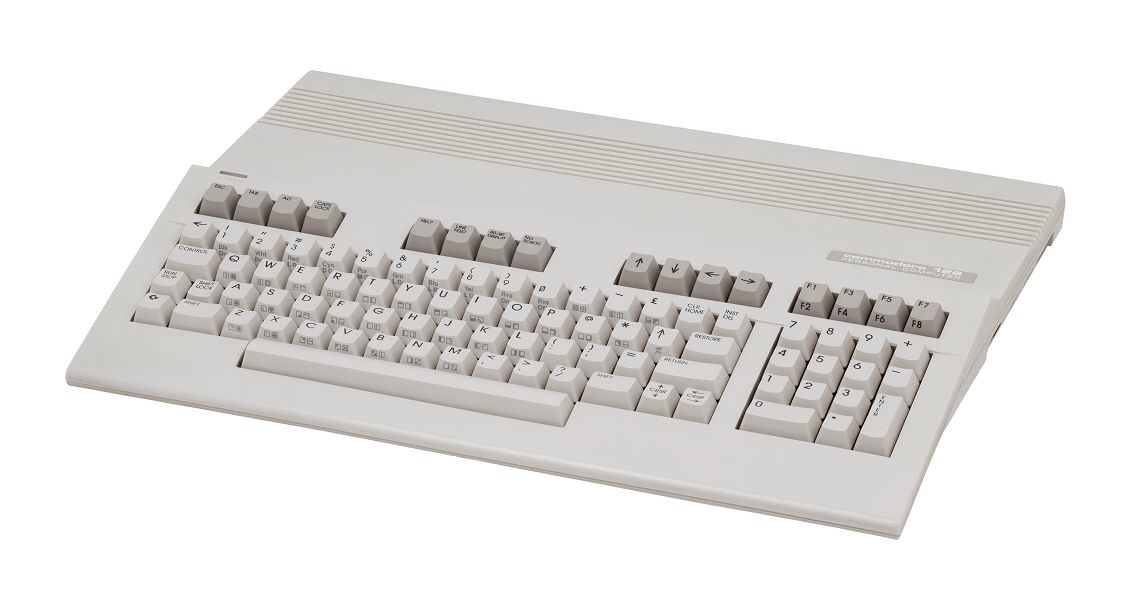
The C128 is a significantly expanded successor to the C64, with nearly full compatibility. It is housed in a redesigned case with an improved keyboard including a numeric keypad and function keys. Memory was enlarged to 128 KB of RAM in two 64 KB banks. A separate graphics chip provided 80-column color video output in addition to the original C64 modes. It also included a Zilog Z80 CPU which allows the C128 to run CP/M, as an alternative to the usual Commodore BASIC environment. The huge CP/M software library, coupled with the C64’s software library, gave the C128 one of the broadest ranges of available software among its competitors.
A Beta Version of the Core is available on the FileHost:
https://files.mega65.org?id=192560f2-60f6-4b51-be37-aabb8e896151
Documentation, Source Code and Downloads can be found on the Github:
https://github.com/eilers/c128Mega65
You can discuss or ask for help in the Discord:
https://discord.com/channels/719326990221574164/1519078295277404300
And the latest news can be found on the development blog here:
https://wiki.eilers-online.net/c128Mega65
Commodore PET Series
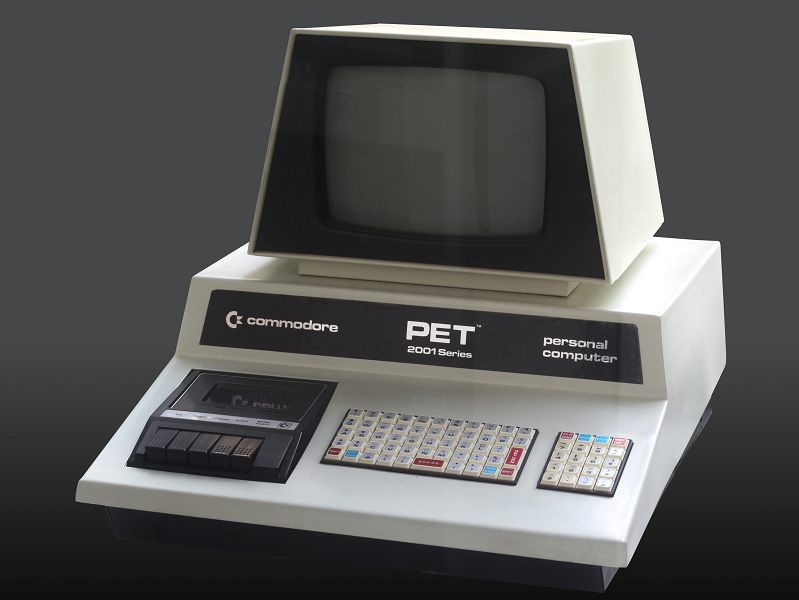
MegaPET is an implementation of MANY variations of the Commodore PET line of computers, the forerunners to the VIC-20 and the Commodore 64.
You can find it on the official Filehost here: https://files.mega65.org?id=468325ae-7e27-475d-80e7-a0f0af409446
You need to follow a lot of specific instructions for setup, available on the Github here: https://github.com/Rhialto/MegaPET/blob/rhialto/README.md
You can discuss the development of this core on Discord here: https://discord.com/channels/719326990221574164/1282765235639549993
MSX-1
https://en.wikipedia.org/wiki/MSX
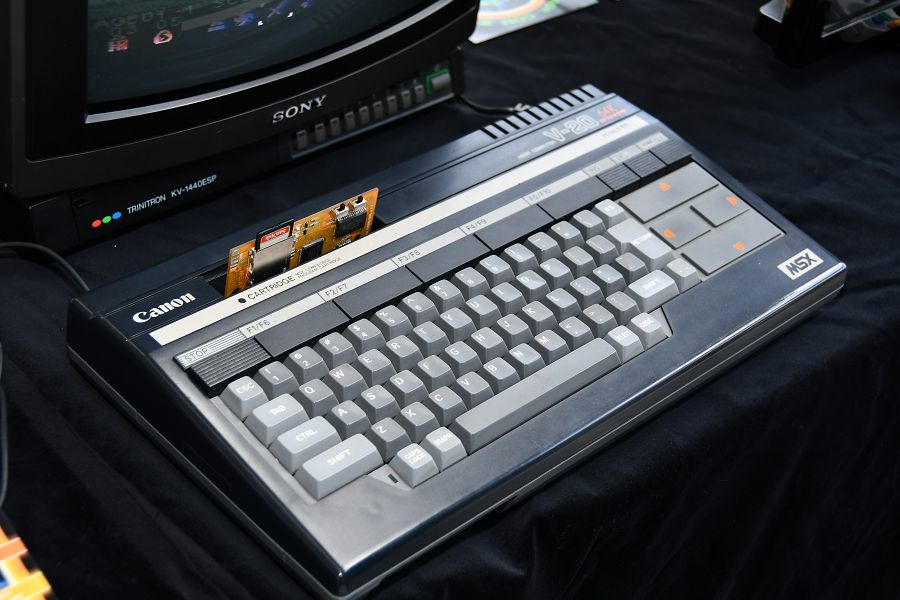
MSX is a standardized home computer architecture, announced by ASCII Corporation on June 16, 1983. It was initially conceived by Microsoft as a product for the Japanese market, and jointly marketed by Kazuhiko Nishi, the director at ASCII Corporation. Microsoft and Nishi conceived the project as an attempt to create unified standards among various home computing system manufacturers of the period, in the same fashion as the VHS standard for home video tape machines.
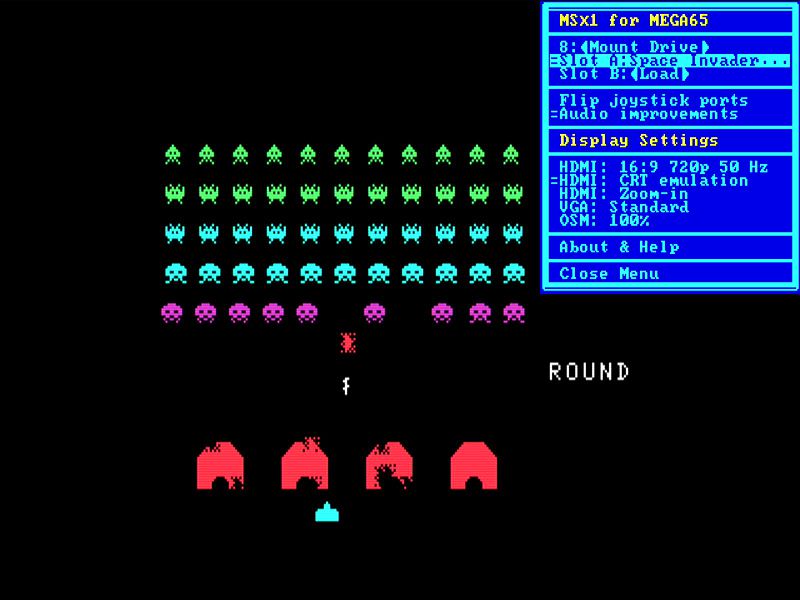
This core turns the MEGA65 into a PAL MSX1 home computer. Load cartridge ROMs straight from the SD card and run them at the original MSX1 hardware timing, with the MEGA65 keyboard, joysticks, video and audio all wired up and configurable through an on-screen menu.
Download the Core on Discord: https://discord.com/channels/719326990221574164/1534194620911587349/1534195147984863355
The Core discussion on Discord: https://discord.com/channels/719326990221574164/1534194620911587349
The Core issue tracker on Github: https://github.com/piso77/MSX1-MEGA65/issues
TI 99/4A
https://en.wikipedia.org/wiki/TI-99/4A
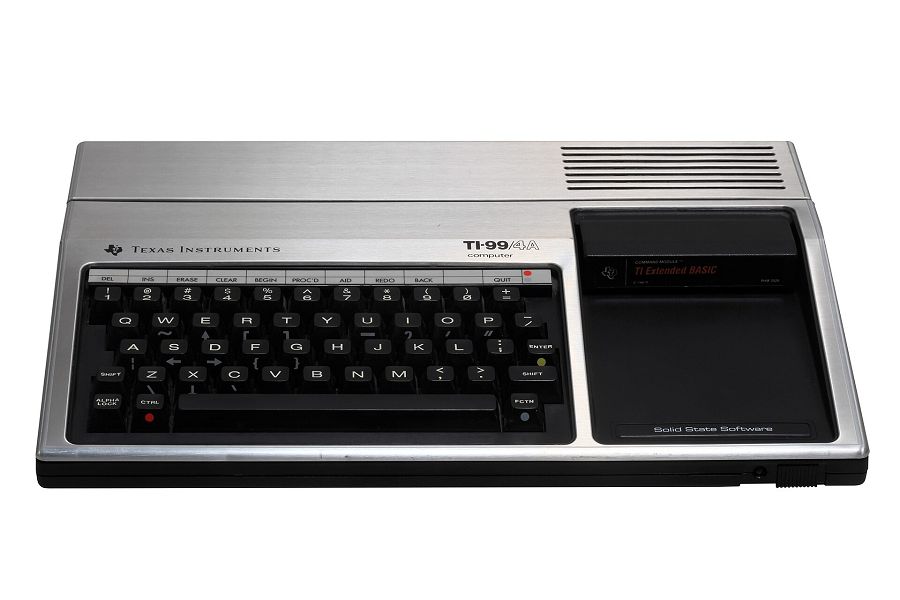
The TI-99/4A is a personal computer released in 1981 by Texas Instruments with a unique internal design and extensiblity by cartridges.
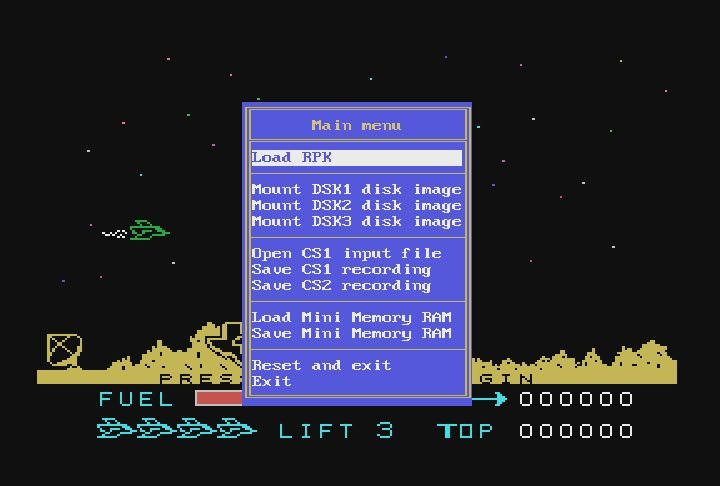
The core is written from scratch specifically with the MEGA65 as its target. It tries to match the timing of the original TI-99/4A as closely as possible, but also features a 36x turbo mode, where the TMS9900 runs at 108 MHz. Setup requires some extra files, please check the instructions provided in the README.MD file in the download.
Please use Core Versions 1.4 or higher to have proper HDMI 480p output.
Download the Core on the MEGA65 Filehost: https://files.mega65.org?id=a25ce133-ed07-4ef7-8495-179d69c43ed0
The Core discussion on Forum64: https://www.forum64.de/index.php?thread/151162-mega99-a-ti-99-4a-core-for-the-mega65/
The Core issue tracker on Github: https://github.com/zeldin/Mega99/issues
Sinclair QL
https://en.wikipedia.org/wiki/Sinclair_QL
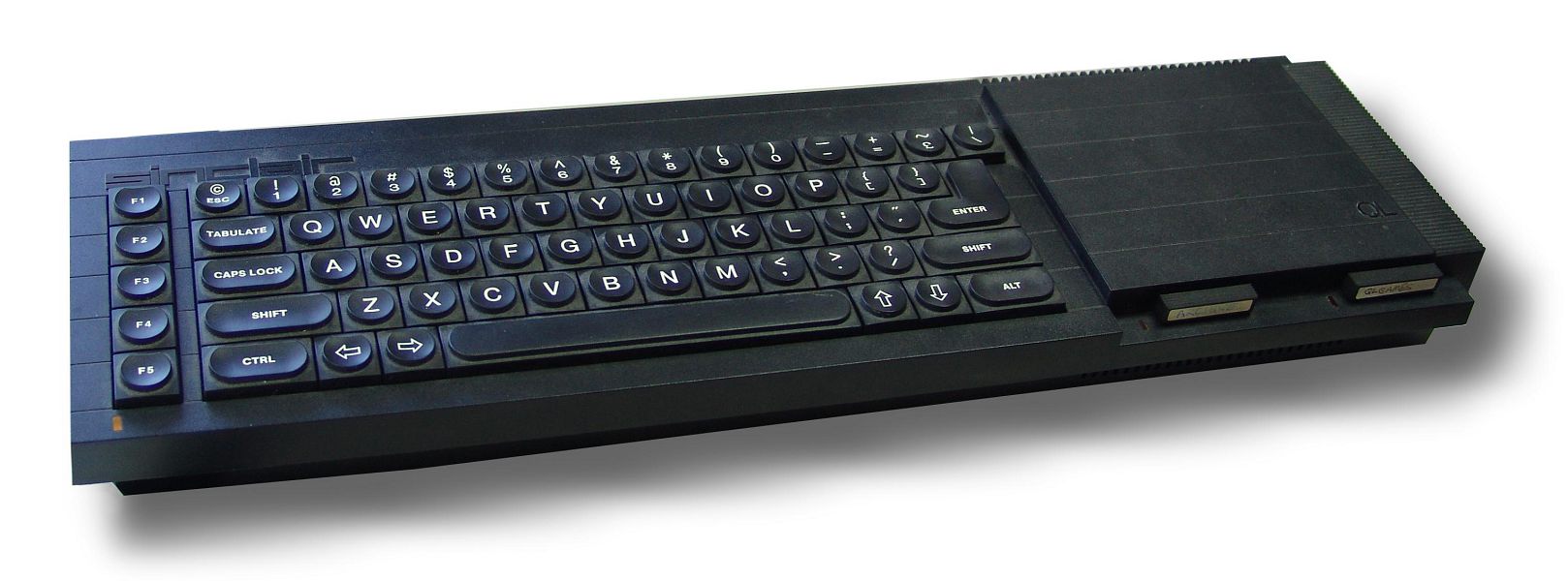
The Sinclair QL was a personal computer released by Sinclair Research in 1984, built around a Motorola 68008 CPU running at 7.5MHz. It ran QDOS, a multitasking operating system years ahead of its time, and used Microdrives (small tape-loop cartridges) instead of floppy disks for storage.
You can find a version of the Core on the Filehost: https://files.mega65.org?id=c1d4f142-8552-423f-a30b-285b8a786c99
Also you can discuss the Core and get updates on Discord: https://discord.com/channels/719326990221574164/1533550109449650277
ZX Spectrum
https://en.wikipedia.org/wiki/ZX_Spectrum
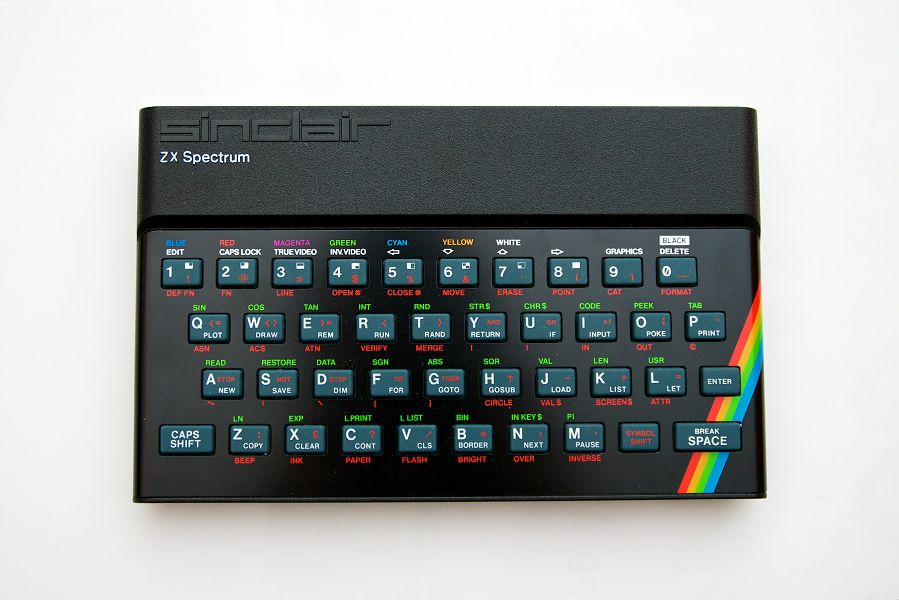
The ZX Spectrum is a home computer released in 1982.
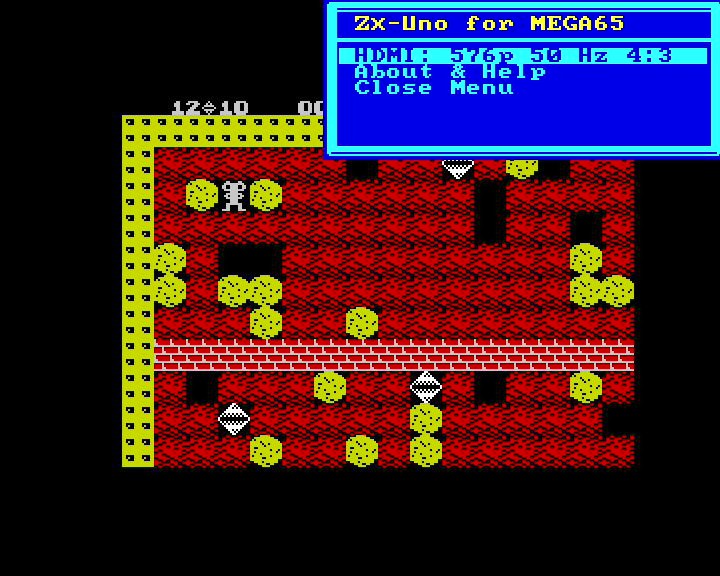
The ZX Spectrum Core for the MEGA65 is a port of the ZX-UNO project to the MEGA65 framework. It needs to be carefully setup and requires specific files and directories on the SD Card. It can run most ZX Spectrum software and uses .tap files. The Core is not as user-friendly as the C64 core, as the Spectrum uses a different keyboard layout, has specific options for Joysticks (the original ZX Spectrum did not have a joystick port so games have options for different hardware extensions) and sometimes need some extra help in configuring specific games.
The Core is available in versions for R3 and R6 boards
Read the instructions for proper SD Card setup: https://github.com/sy2002/zxuno4mega65/wiki/Getting-Started
Download the Core on the MEGA65 Filehost:
https://files.mega65.org?id=bdaeb7e0-9fc8-4185-99de-104d01229f27
Discuss the Core in the Alternate Cores channel on Discord:
https://discord.com/channels/719326990221574164/1177364456896999485
The Core issue tracker on Github:
https://github.com/sy2002/zxuno4mega65/issues
Nascom2
https://en.wikipedia.org/wiki/Nascom
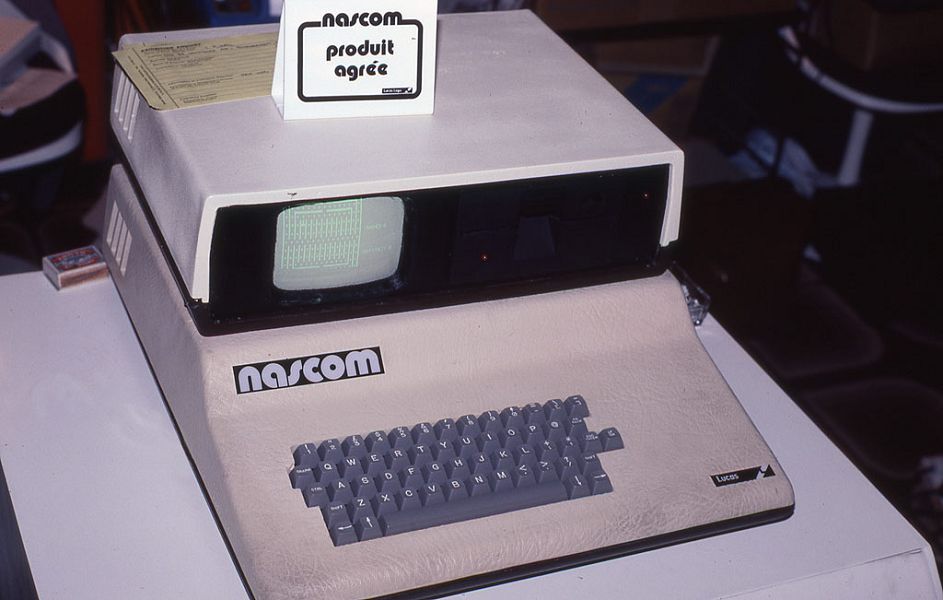
The Nascom 1 and 2 were single-board computer kits issued in the United Kingdom in 1977 and 1979, respectively, based on the Zilog Z80 and including a keyboard and video interface, a serial port that could be used to store data on a tape cassette using the Kansas City standard, and two 8-bit parallel ports. At that time, including a full keyboard and video display interface was uncommon, as most microcomputer kits were then delivered with only a hexadecimal keypad and seven-segment display. To minimize cost, the buyer had to assemble a Nascom by hand-soldering about 3,000 joints on the single circuit board.
Find all info about this Core on the Filehost: https://files.mega65.org?id=b9646621-8287-4bb9-9209-4a3450a0f188
Cores still in Development (incomplete)
Atari 400 / 800 / XL
https://en.wikipedia.org/wiki/Atari_8-bit_computers
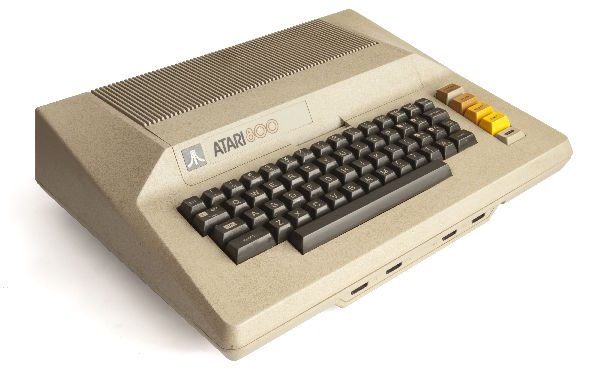
The Atari 8-bit computers, formally launched as the Atari Home Computer System, are a series of home computers introduced by Atari, Inc., in 1979 with the Atari 400 and Atari 800. The architecture is designed around the 8-bit MOS Technology 6502 CPU and three custom coprocessors which provide support for sprites, smooth multidirectional scrolling, four channels of audio, and other features. The graphics and sound are more advanced than most of its contemporaries, and video games are a key part of the software library. The 1980 first-person space combat simulator Star Raiders is considered the platform’s killer app.
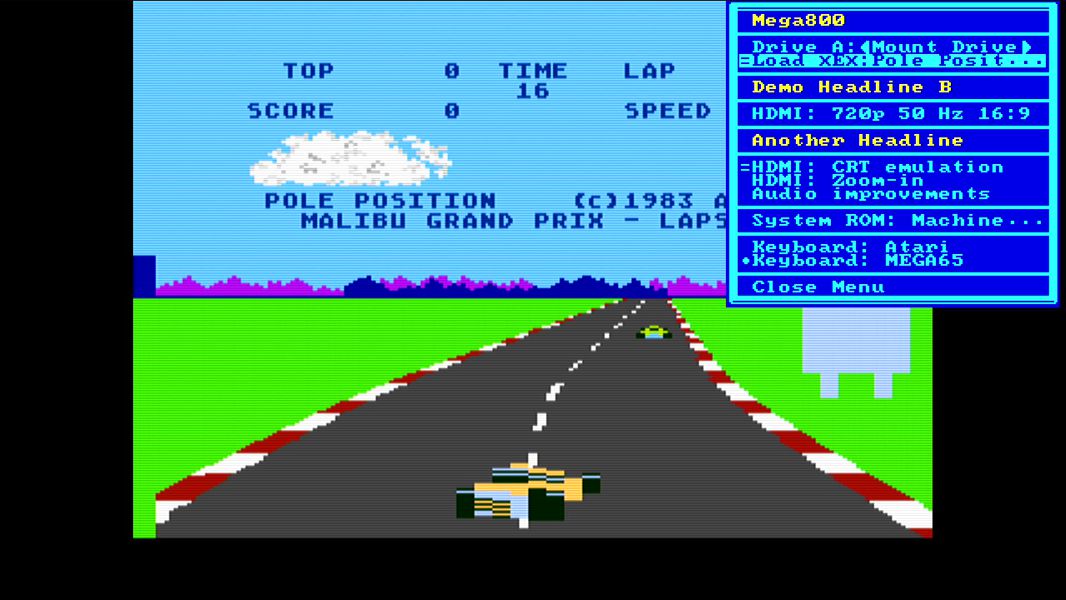
A Version of this Core has been released for public testing and feedback via Discord only (it is not on the Filehost). To download the core, please download the files and read the instructions for setup on Github:
https://github.com/sho3string/Mega800
To discuss the latest news about this core, please check Discord:
https://discord.com/channels/719326990221574164/1539174975595094088/1546478161661792317
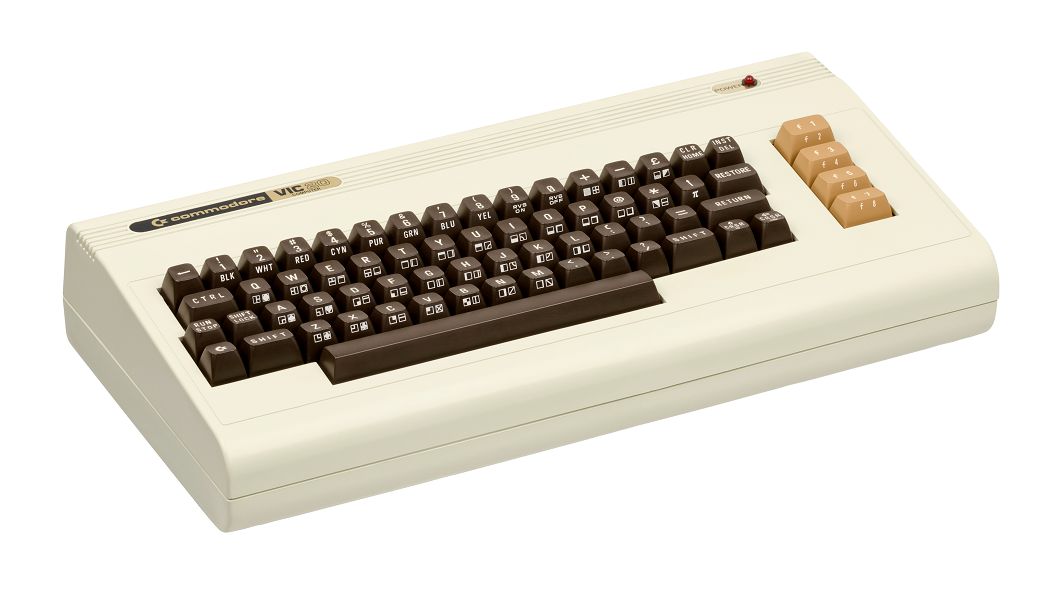
VIC-20 / VC-20
https://en.wikipedia.org/wiki/VIC-20
The VIC-20 (called VC20 in Europe) is a personal computer released in 1980/81.
An Alpha Version of this Core has been released for public testing and feedback via Discord only (it is not on the Filehost). To download the core, read the instructions and follow the discussion on Discord here:
https://discord.com/channels/719326990221574164/1282769253921198120
Further instructions and the source code can be found here:
https://github.com/MJoergen/VIC20MEGA65
Cores in Development, unavailable
Amiga (Core Development by Kiwi)
A second Amiga core has started development, but currently there is nothing to try out. Please check the Discord for current development news. The goal is to support more machines and chipsets than just the Amiga 500 and OCS.
https://discord.com/channels/719326990221574164/1313409877393276948
Fantasy Machines
Vixen-32 “Fantasy” Core
The Vixen-32 Core is a newly created RISC-V based computer with C64 vibes. It does not exist in the real world, but only inside the MEGA65. You can run DOS-era type games on this Core, when they are specifically compiled.
As this is a work-in-progress, we would refer your to the Discord dicussion of this unique system: https://discord.com/channels/719326990221574164/1534062354982244372